Ask three people in SEO what a niche edit is and you'll get three slightly different answers. Some use it interchangeably with link insertions. Some reserve it for links added to older, already-ranking articles. Some use it as a polite label for something they'd rather not describe plainly. The term is fuzzy, which is exactly why it's worth pinning down before you buy, sell or build one.
This guide explains what niche edits are, how they relate to link insertions, when they genuinely work, the ways they go wrong, and how to vet a contextual placement so that you end up with a link a reader would actually click.
What a niche edit actually is
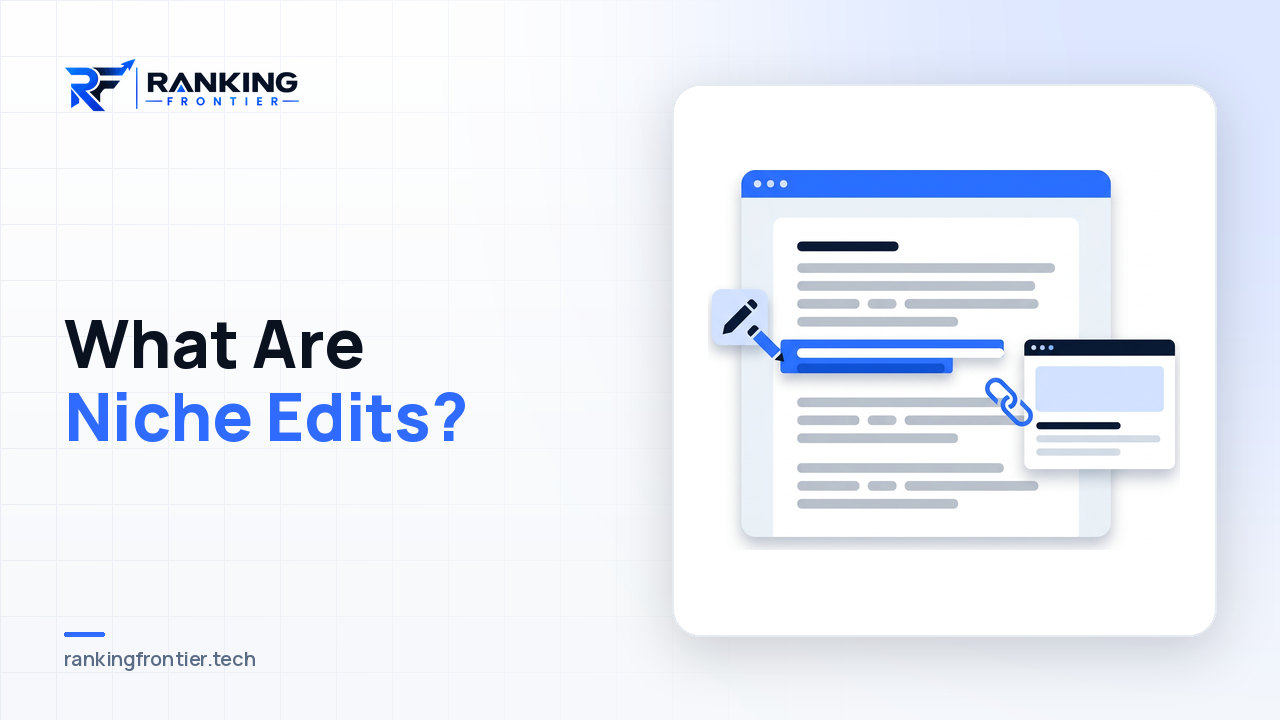
A niche edit is a contextual backlink added to an existing, published article on a site that is topically relevant to yours. Nothing new is created; an editor adds a sentence or adjusts an existing one so that it references your page where that reference is useful. The "niche" part is the point: the host article and site should be in the same subject area as the page being linked to.
In practice, "niche edit" and "link insertion" describe the same mechanism. The distinction people sometimes draw is one of emphasis: niche edits stress topical alignment and established, aged pages, while link insertions is the broader term for any link placed into existing content. If you're comparing services, ask what the placement actually involves rather than relying on the label.
Why they can work so well
A well-executed niche edit has three things going for it that a brand-new guest post doesn't:
- The page already has history. It's indexed, it may already rank, and it may already have links of its own. A new guest post starts from zero on all three counts.
- The page already has readers. A link in an article people are currently finding through search sends actual visitors, not just a signal.
- The context is established. The article was written about your topic before you came along, which makes the reference read naturally rather than as content built around a link.
That combination is why a single relevant niche edit on a genuinely read page can be worth more than several placements on new pages nobody will visit.
Where niche edits go wrong
The same mechanism that makes niche edits effective also makes them easy to abuse, and the abused version is what has given the term its mixed reputation.
- Irrelevant host pages. A link to accounting software dropped into an article about garden furniture is not a niche edit; it's an off-topic paid link, and it looks like one.
- Hacked or unauthorised insertions. Some sellers add links without the site owner's knowledge. These get removed, and being associated with them is a risk you don't want.
- Expired-domain networks. Aged domains bought for their backlink history, refilled with generic content and sold as "authority" placements. The history is real; the site is not.
- Forced sentences. A paragraph bolted onto the end of an article that exists only to hold the anchor text. Readers skip it, and it's a recognisable pattern.
- Exact-match anchors everywhere. If every insertion uses the same commercial phrase, the profile looks manufactured because it is.
Search engines' link-spam policies target exactly these patterns. The safe and effective version of a niche edit is the one that would survive a human editor reading the article cold.
How to vet a niche edit placement
Before a contextual link goes live, check the page, not just the domain:
- Topical fit of the specific article. Is the article actually about, or closely related to, the page you're linking? Site-level relevance isn't enough if the individual page is off-topic.
- Does the page earn traffic? Check whether it ranks for anything and whether it's still being found. A dead page on a live site is a weak placement.
- Is the site legitimate? Real editorial focus, real authors, a sensible outbound link pattern, no signs of being an expired domain or part of a network.
- Is the placement editorially justified? Read the sentence where the link will sit. Would it make sense, and be useful, to a reader who has never heard of you?
- Is the anchor natural? A brand name, a page title or a descriptive phrase that fits the sentence. Not a keyword shoehorned in.
- Is the site owner aware and in control? Placements should be arranged with whoever actually runs the site.
If the answer to any of the first four is no, walk away regardless of the metrics. The relevance-first standards that apply to link building in general apply here without exception.
Niche edits vs guest posts: which to use
They solve different problems, and most programmes benefit from both:
- Choose a niche edit when a relevant, well-read article already exists and your page genuinely adds to it. Faster, no new content required, and the page's existing authority works for you immediately.
- Choose a guest post when you want to introduce a perspective, reach a publication's audience with a full piece, or build a relationship with an editor that leads to more.
Cost and speed usually favour niche edits; control over messaging and long-term relationship value usually favour guest posts. Neither compensates for a weak site, so vetting comes first in both cases.
Anchor text and target pages
Two decisions shape whether a niche edit helps or hurts. First, the anchor: vary it, keep it natural, and let it describe the destination rather than repeat a target keyword. Second, the page you point to: a niche edit into a thin or purely promotional page wastes the placement. Link to pages with genuine substance, whether that's a guide, a well-built resource or a service page that actually explains something. Readers who follow the link should find what the sentence promised.
FAQ
Are niche edits against Google's guidelines?
The mechanism itself, an editor adding a relevant reference to an existing article, is ordinary editorial behaviour. What the guidelines prohibit is buying or manipulating links to pass ranking value, and irrelevant, paid, or unauthorised insertions fall squarely into that. The safe version is one that is relevant, editorially justified and arranged transparently with the site owner.
Do niche edits work faster than other links?
They're often discovered faster because the host page is already indexed and crawled regularly, and referral traffic can start immediately. Ranking effects still compound over months, as with any authority building.
How many niche edits does a site need?
There's no honest universal number. A few relevant, well-placed contextual links on pages people read regularly outperform a large volume of weak ones, and the right mix depends on your market and what your competitors have earned.
Conclusion
A niche edit is a contextual link in an existing, relevant article, and at its best it's one of the most effective placements available: established page, real readers, natural context. At its worst it's an off-topic paid link on a domain someone bought for its history. The label doesn't tell you which one you're getting. The vetting does. Check the page, check the site, insist on editorial justification, and only then decide. If you'd rather that work was done for you, our niche edit service follows exactly this standard.