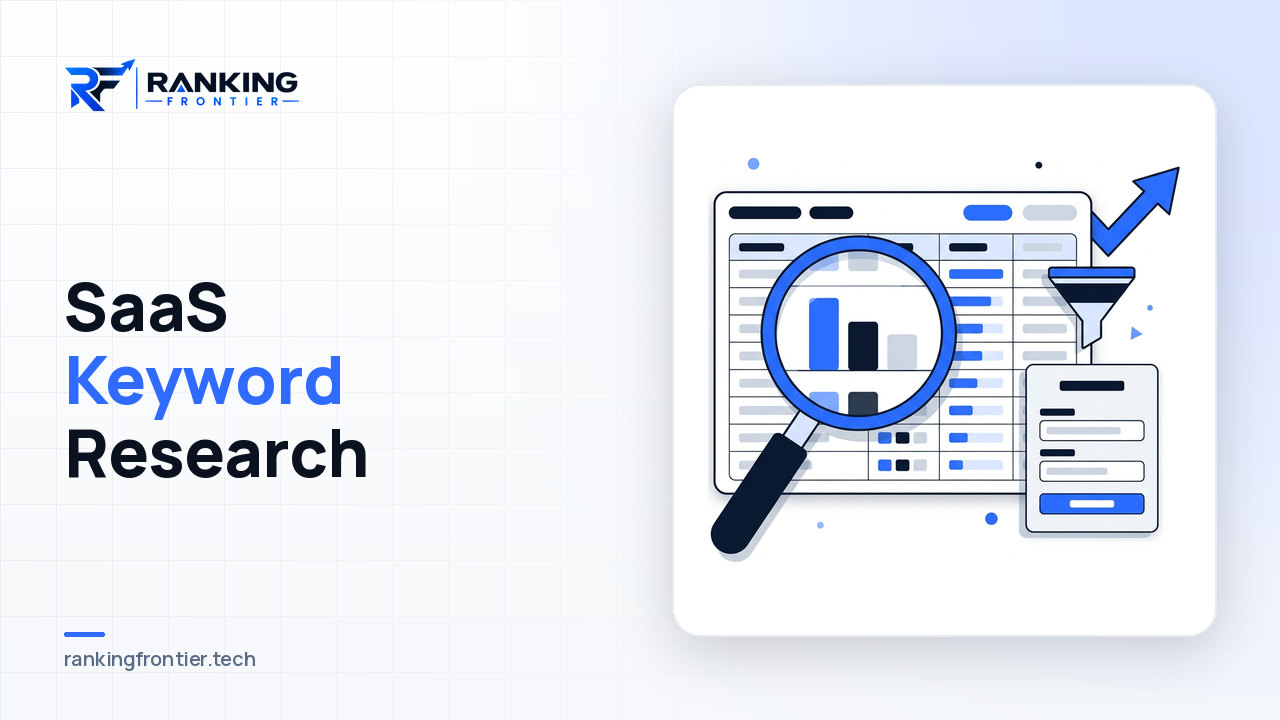
Keyword research for SaaS looks like keyword research for anything else until you try to act on it. The highest-volume terms belong to giants, the product category is often something buyers don't know the name of yet, and the queries that actually drive signups are scattered across problems, alternatives, integrations and use cases that no single tool report will surface neatly. Applying an e-commerce or publisher playbook to a software product usually produces a long list of terms nobody on the team can rank for or convert.
This guide covers a practical approach to SaaS keyword research: where the valuable queries hide, how to group them around the way software is actually bought, and how to prioritise when the sales cycle is long and the competition is well funded.
Why SaaS keyword research is different
Three things change the job for software companies:
- Buyers search by problem before they search by category. Someone who eventually buys scheduling software may start with "how to stop double-booking clients". The category term comes late, if at all.
- The sales cycle is long and multi-step. A single visit rarely converts. Keyword research has to cover awareness, evaluation and decision stages, not just the final one.
- Competition is concentrated at the top. Head terms are dominated by established players and comparison sites. The realistic wins for most SaaS teams are in the long tail and in intent-rich mid-funnel queries.
The consequence is that "find high-volume keywords and write pages for them" is the wrong brief. The right brief is to map how your customers move from problem to purchase and find the queries at each step.
Start with customers, not tools
Before opening a keyword tool, collect language from the people who already bought:
- Sales call notes and demo requests: how prospects describe the problem in their own words.
- Support tickets and onboarding questions: what people are trying to do with the product.
- Review sites: the phrases customers use to praise and criticise you and your competitors.
- Community threads and forums in your market: the questions asked before anyone names a product.
This produces seed terms a tool would never suggest, and it grounds everything that follows in real buyer intent rather than in whatever a database happens to have volume data for.
The keyword types that matter for SaaS
Most valuable SaaS queries fall into a handful of recognisable patterns. Building your research around them keeps the list actionable.
Problem and "how to" queries
Top-of-funnel searches about the pain your product solves. These carry volume and attract links, and they're where topical authority is built. They convert slowly, so they need to be connected clearly to the pages that do convert.
Category and "software for" queries
"Time tracking software", "best CRM for small agencies", "invoicing tool for freelancers". Commercial investigation intent, usually served by comparison-style pages. Modifiers (industry, team size, platform) are where smaller products can compete.
Alternative and comparison queries
"[Competitor] alternatives" and "[Competitor] vs [Competitor]" are among the highest-intent queries in software. People searching them are actively choosing. Honest comparison pages that acknowledge trade-offs perform better than one-sided ones, and they hold up better over time.
Integration and use-case queries
"[Your product] + [tool] integration", "[category] for [industry]", "[task] template". Low volume individually, high relevance collectively, and often nearly uncontested. These are frequently the best return on effort for an early-stage product.
Feature and job-to-be-done queries
Searches for a specific capability ("automated invoice reminders", "shared inbox for support") where the searcher wants a feature and may not care what category it belongs to. Feature pages that explain the outcome, not just the button, can rank here.
Mapping keywords to the funnel and to pages
Once terms are gathered, group them by intent and assign each group to one page type. A simple mapping that works for most products:
- Problem / how-to → blog articles and guides that link to the relevant feature or use-case page.
- Category / "software for" → landing pages or well-structured comparison content.
- Alternatives / vs → dedicated comparison pages, one per competitor where it's warranted.
- Integration / use case → integration and use-case pages, often templated but individually written.
- Feature → feature pages written around outcomes.
Reading the results page for each group confirms the format. If a "software for" query is returning listicles rather than product pages, a product landing page alone won't rank; a comparison article that includes your product honestly is the realistic route. This is the same intent-first logic that underpins any durable SaaS SEO strategy; keyword research is where it becomes concrete.
Prioritising when everything looks important
A SaaS keyword list can easily run to thousands of rows. Prioritise with four questions rather than volume alone:
- How close to purchase is this query? Alternatives, comparisons and integration terms usually outrank problem queries in commercial value even at a fraction of the volume.
- Can we realistically rank? Look at who holds the top results. If it's exclusively large brands and aggregators, park it for later and target the modifier versions now.
- Do we have something genuinely useful to say? A page that exists only because a keyword exists rarely ranks and never converts.
- Does it support a cluster? Queries that reinforce a topic you're already building authority in compound; isolated wins don't.
A practical output is a short roadmap: a handful of decision-stage pages first, the supporting use-case and integration pages next, and the broader problem content built steadily behind them. Authority earned by the informational content, including through relevant link building, then flows to the pages that convert.
Tracking what matters
Volume estimates for SaaS terms are often unreliable, especially in niche B2B categories where tools report zero for queries that clearly drive signups. Track outcomes instead: impressions and clicks per page group, trial or demo requests attributed to organic, and which query groups are growing. Revisit the research quarterly. Competitors launch, categories get renamed, and the queries your customers use will shift with them.
FAQ
Should a SaaS company target keywords with zero reported volume?
Often, yes. Tool volume data is weakest in exactly the niche B2B queries where SaaS products win. If customers, sales calls or your own search console data show people using a phrase, it's real, whatever the tool says.
How many keywords should one page target?
One primary intent, expressed however many ways people phrase it. A page about "invoice reminder software" naturally covers "automated payment reminders" and "late invoice follow-up tool" without separate pages. Split pages only when the intent genuinely differs.
Are competitor comparison pages worth the effort?
For most SaaS products they're among the best-converting organic pages. They work when they're accurate and fair; a comparison that misrepresents a competitor damages trust with the exact reader who was about to choose.
Conclusion
Good SaaS keyword research starts with how customers describe their problem, organises queries around the stages of a software purchase, and prioritises by intent and realism rather than by volume. Done that way, it produces a shorter list, a clearer site structure, and pages that have a reason to exist beyond the keyword in their title.