Two pages can target the same keyword, have similar authority, and still land in completely different places in the results. The difference is usually search intent: what the person typing that query actually wants to happen next. Search engines have become very good at working that out, which means a page that answers the wrong version of the question rarely ranks for long, however well it's written.
This guide explains what search intent is, the main types you'll run into, how to read intent from the results page itself, and how to shape a page so it matches what searchers are looking for.
What search intent actually is
Search intent (sometimes called keyword intent or user intent) is the goal behind a query. "Best project management software" and "project management software pricing" contain nearly the same words, but the first person is still comparing options while the second has narrowed down and wants numbers. A page built for one will disappoint the other.
Search engines treat intent as a ranking input in a practical way: they watch which kinds of pages satisfy people for a given query and keep favouring that shape of result. That's why the results for some queries are all product pages, others are all how-to articles, and others mix videos, definitions and tools. The results page is a record of what has worked.
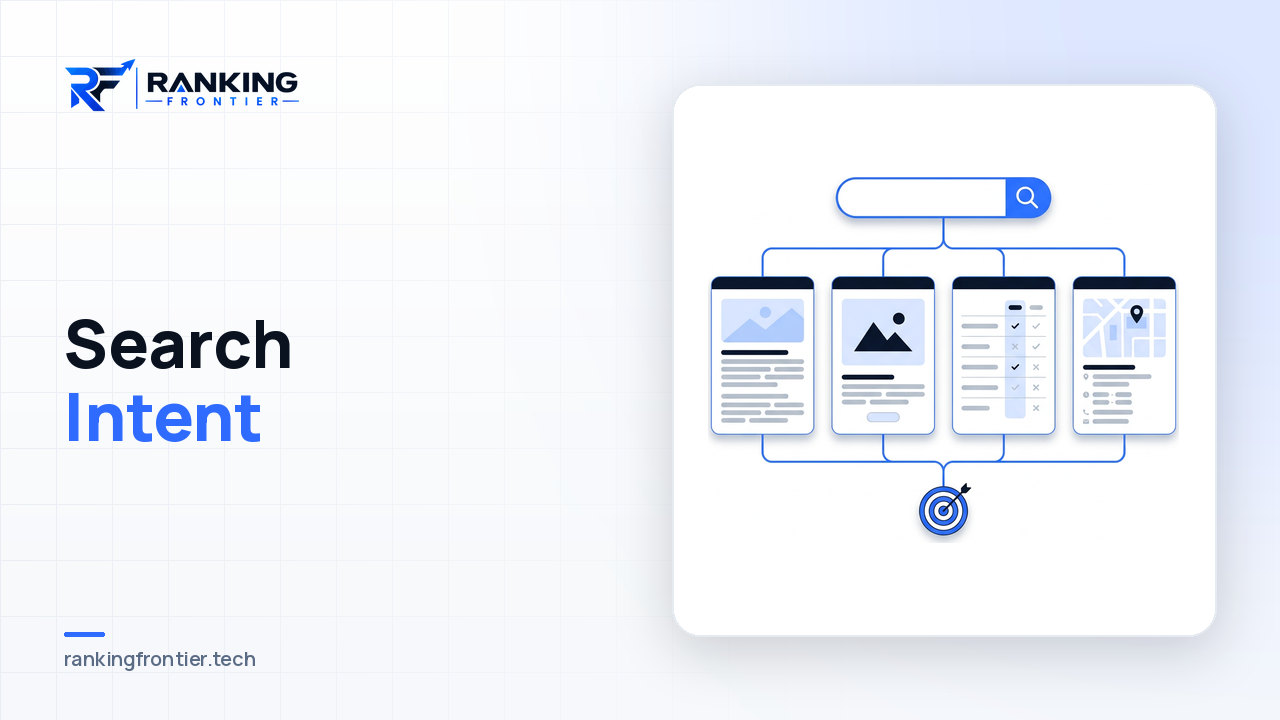
The four common types of search intent
Most queries fall into one of four broad buckets. The labels matter less than the habit of asking "what does this person want to do next?"
Informational
The searcher wants to learn or understand something: "how does canonicalisation work", "what is a niche edit", "why is my site slow". They're not ready to buy and usually don't want to be sold to. Guides, explainers and answers win here.
Navigational
The searcher already knows where they want to go: a brand name, a product name, "login" queries. Unless you are that brand, these are rarely worth targeting.
Commercial investigation
The searcher is evaluating: "best", "vs", "review", "alternatives", "top tools for". They want comparison, criteria and honest trade-offs. Thin listicles that exist only to push one option tend to underperform because they don't help the decision.
Transactional
The searcher is ready to act: "buy", "pricing", "book a demo", "hire", "near me". They want a clear path to the thing itself, not an essay before it.
Plenty of queries sit between buckets, and intent can shift over time as a market matures. Treat the categories as a starting point, then confirm against the live results.
How to read intent from the results page
The fastest way to understand informational vs commercial intent for any keyword is to search it and look carefully at what ranks. A few things to note:
- Page types. Are the top results articles, category pages, product pages, tools, or a mix? The dominant type tells you the format searchers expect.
- Result features. Featured snippets, "People also ask" boxes and video carousels signal informational intent. Shopping results, pricing tables and map packs signal transactional intent.
- Title patterns. If every ranking title starts with "How to", a comparison page is fighting the current. If every title says "Best X", a definition-style guide is in the wrong place.
- Freshness. Recent dates across the top results suggest the query rewards up-to-date content.
- Mixed results. When the page is split between formats, intent is genuinely mixed. Pick the intent that matches your business goal and be excellent at that version rather than trying to be everything at once.
Do this for a handful of queries in the same topic and patterns emerge quickly. It's also the single best check before you brief or write anything, because it tells you the shape of the page you need before you decide what to say in it.
Mapping keyword intent to the right page
Once you know the intent behind a group of keywords, the next question is which page should own it. A few rules of thumb hold up well:
- One primary intent per page. A page can serve secondary intents in later sections, but the top of the page should satisfy the main one immediately.
- Group by intent, not just by wording. "SEO audit checklist", "how to audit a website for SEO" and "site audit steps" want the same thing and belong on one page. "SEO audit services" wants a different page entirely.
- Don't force commercial pages into informational slots. If a service page isn't ranking for a "what is" query, the fix is usually a supporting article that answers the question and links to the service, not more copy on the service page.
- Watch for cannibalisation. Two pages with the same intent compete with each other. Merge them or give each a clearly distinct job.
This mapping exercise is where intent stops being a concept and becomes a site structure. It's also the point where a lot of content plans get lighter, because you discover that several planned articles were the same intent wearing different keywords.
Shaping a page to match intent
Matching intent is mostly about ordering and format, not word count. Some practical guidelines:
- Answer first. For informational queries, give the direct answer or definition in the opening lines, then expand. Readers and snippet systems both reward this.
- Match the expected format. If the results are step-by-step guides, use numbered steps. If they're comparisons, use criteria and a table or structured sections.
- Reduce friction for transactional intent. Pricing, availability, a clear call to action and the reassurance people need (guarantees, process, who it's for) should be visible without scrolling through an introduction.
- Handle follow-up questions. The "People also ask" box is a list of what people wonder next. Covering those naturally, with headings, makes a page more complete without padding it.
- Cut what doesn't serve the intent. A history section on a "pricing" page, or a hard sell at the top of a beginner's guide, works against the visit.
Why intent matters for authority building too
Intent isn't only an on-page concern. Pages that satisfy their query are the ones other sites reference, which is why the best-linked pages on most sites are clear, useful informational pieces rather than sales pages. If your link building is pointing at pages that don't match the queries they target, you're building authority into pages that can't convert it. Get the intent right first; links then have somewhere worthwhile to land.
The same logic applies to broader strategy. An SEO audit that ignores intent will report on titles and speed while missing the reason a page underperforms: it's the wrong kind of page.
FAQ
Can one page target more than one search intent?
It can serve secondary intents in later sections, but it should lead with one. When two intents are both important and both substantial, two pages linked to each other usually perform better than one page trying to do both jobs.
How do I tell if a page is failing because of intent?
Compare your page format to the pages that rank. If yours is a different type (a product page among guides, a long article among tools), intent is the likely problem. Rankings that stall on page two despite decent authority are another common sign.
Does search intent affect keyword research?
It should shape it. Grouping keywords by intent before you assign them to pages prevents duplicate content and shows which queries need new pages versus which can be folded into existing ones.
Conclusion
Search intent is the simplest and most reliable lens in SEO: work out what the searcher wants to do next, then build the page that helps them do it. Read the results page before you write, give each page one clear job, and let the format follow the intent. Everything else, from content structure to link building, works better once that decision is right.