Every link you earn or arrange has to point somewhere, and that choice gets less attention than it deserves. Agencies ask clients for a “target URL list” and receive the homepage plus three service pages. Forum threads trade ratios (a third to the homepage, 75/25, 50/25/25) that contradict each other, which is a reasonable sign that none of them is the answer.
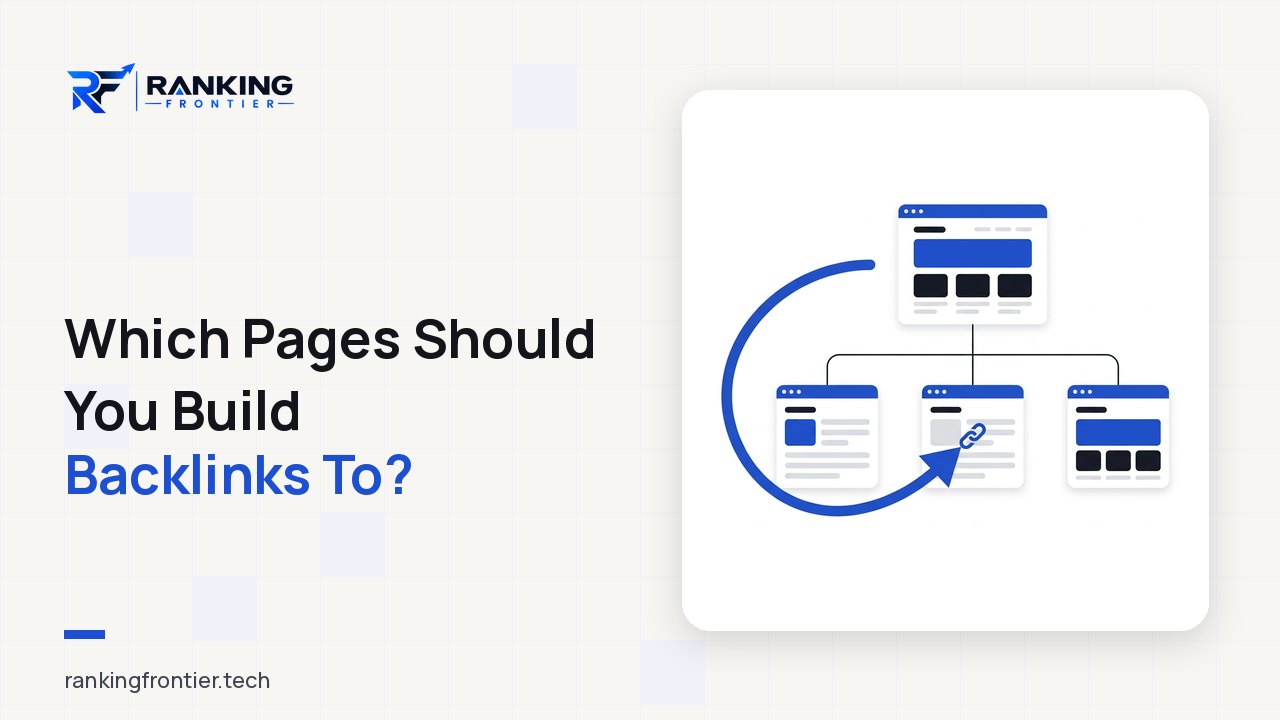
The short answer: point each link at the page you need to rank for the query that link is meant to support, provided that page is one a publisher could plausibly link to. When it is not, which is common for service, pricing and product pages, earn the link to a page that genuinely merits it and connect that page to the commercial target with internal links. Point links at the homepage when the publisher is referring to the brand itself, not because a percentage says you should.
What a Link Does for the Page It Points To
Google describes links in two ways that matter here. In its public explanation of ranking, it says that whether “other prominent websites link or refer to the content” is one of the factors used to judge quality, and “generally a good sign that the information is trustworthy” (Google, How Search Works). In the SEO Starter Guide, it describes anchor text as something that “tells users and Google something about the page you’re linking to” (Google Search Central). Both statements are about the content, that is, the specific page being linked, not the site as a whole.
The mechanics behind that are page-level too. The original PageRank formula, published by Page and Brin in 1998, gives a page a score that depends on the scores of the pages linking to it, with each linking page’s contribution divided by the number of links it carries (Stanford, “The Anatomy of a Large-Scale Hypertextual Web Search Engine”). John Mueller confirmed in 2020 that Google still uses PageRank internally as one of many signals (Search Engine Roundtable). A later Google patent, often called the “reasonable surfer” model, describes weighting links by features such as where they sit and how likely a user is to click them, rather than treating every link on a page equally (US Patent 7,716,225). Patents describe what a company may do, not what it does, so treat that as context rather than confirmed behavior.
Three consequences follow; the first two are documented, the third is our reading:
- Signals attach to URLs. When Mueller was asked about redirecting an entire old site to a new homepage, he called it “a really bad practice” because “we lose all of the signals that are associated with the old content” (Search Engine Roundtable, 2018). The page that receives a link is the page that benefits most directly.
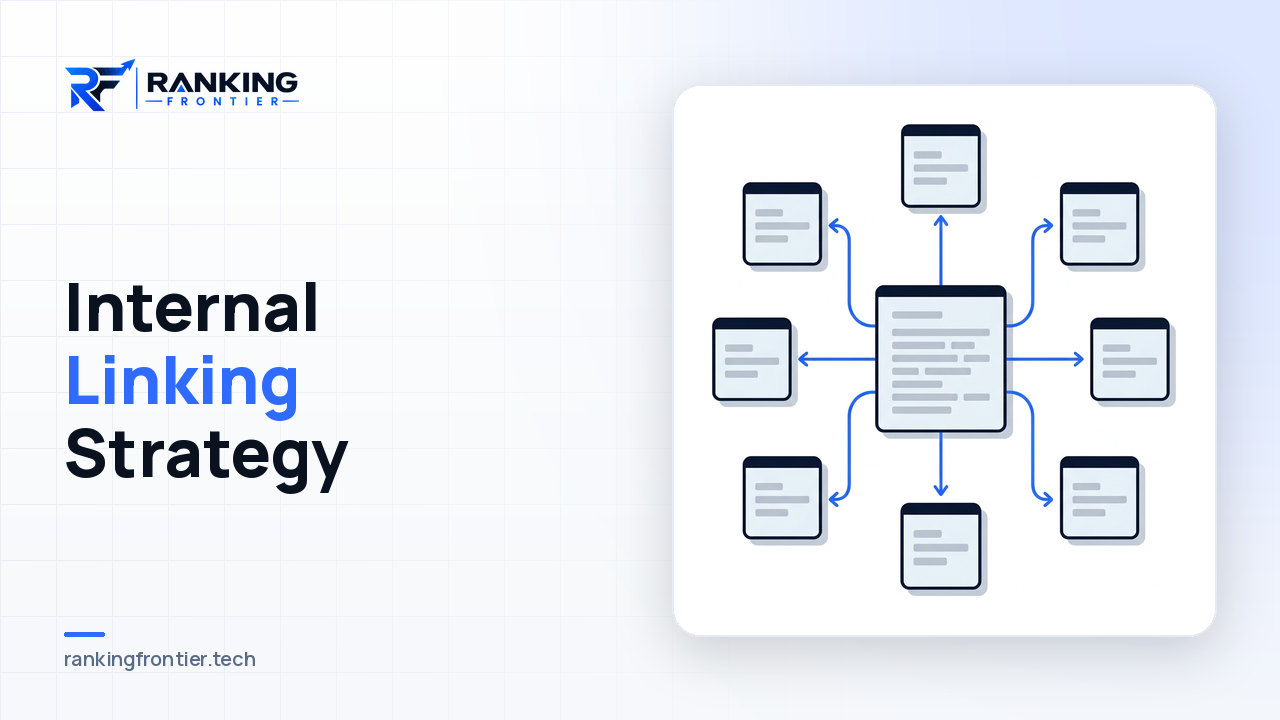
- Value passed on through internal links is shared. Under the published formula, whatever a page passes along is split across the links it contains. A homepage with 120 links in its navigation, footer and body does not forward the full benefit of an inbound link to any one of them.
- Relevance travels with the link. A link from an article about invoice automation to your invoice automation page says something more specific than the same link pointing at your homepage.
Why the Homepage Is a Different Kind of Target
Homepages collect links without anyone building them. Directory listings, press mentions, partner pages, podcast show notes and author boxes overwhelmingly link to the root URL, because the writer is referring to the company rather than to a specific piece of content. Mueller has described the homepage as, on most sites, “the most important part of the website,” the page Google recrawls most often and uses to find other important pages (Search Engine Journal). He has also said that internal linking, and in particular what is linked from the homepage, is how Google gets “a sense of importance within your website” (Search Engine Roundtable, 2021).
That makes the homepage a strong page but a poor target for most ranking goals, for a simple reason: it rarely ranks for anything except the brand name. The queries a business wants (“payroll software for restaurants,” “link building services,” “how to calculate churn”) are answered by inner pages. A link to the homepage helps those pages only indirectly, through internal links, after the homepage has divided that value among everything it links to.
There are exceptions. Single-product sites, one-location local businesses and tools whose homepage is the product often rank their root URL for their main commercial query, and for them it is a legitimate primary target. Everyone else should treat homepage links as something that happens on its own and is worth accepting, not as a quota to fill.
The “Deep Link Ratio” Is Folklore
The idea that a “natural” profile has a particular split between homepage and inner-page links dates to link-selling blogs of the mid-2000s. Search Engine Journal traced the term back to a 2004 agency page and found no evidence from Google that any such ratio is used (Search Engine Journal, 2023). What Google has said points the other way: Mueller stated in 2021 that “the total number of links doesn’t matter at all,” because Google weighs individual links by relevance rather than counting them (Search Engine Journal). A system that does not count totals is not computing a percentage of those totals.
The ratio advice persists because it is a proxy for a real risk. A profile in which every link points at two commercial pages with keyword anchors looks manufactured, and Google’s spam policies name “large-scale article marketing or guest-posting campaigns with keyword-rich anchor text links” as link spam (Google Search Central). The problem is the placement and anchor pattern, not a shortage of homepage links, and padding the profile with homepage links does not change what the money-page links look like.
A Four-Question Test for Choosing the Target URL
Run each link opportunity through these questions in order. The answer tells you whether to point the link at the commercial page directly, route it through a supporting page, or let it go to the homepage.
- Which page should rank for the query this link is meant to support? Name the URL. If you cannot, the link has no ranking goal and the homepage or a brand mention is fine. If two pages compete for the same query, resolve that first; links to a page you later consolidate become links you have to recover.
- Would this publisher plausibly link to that page? Editors link to things that help their readers: data, explanations, tools, a feature page that answers a specific question. They do not link to a pricing page from an unrelated how-to article unless asked to, and that is the pattern the spam policy describes. If the honest answer is no, pick the most relevant page the publisher would link to.
- How far is the target page from being competitive? Compare the referring domains and the quality of links to the pages currently ranking against your page, at the page level, not the domain level. A page that is ten reasonable links behind is a direct-link candidate. A page with no links on a site with no links is a different problem, covered under how long link building takes.
- Is the target well connected internally? A page linked from the homepage, the navigation and several related articles picks up value from links to any of them. A page three clicks deep with one footer link does not, and links pointed at it do not flow back out either. Check this first, using our internal linking guide.
The outcomes map cleanly. Direct: the page should rank, is linkable and is within reach, so link to it. Indirect: the page should rank but no one would link to it, so earn the link to a related guide, comparison, dataset or tool and make sure that asset links prominently to the commercial page. Brand: no specific ranking goal, or the publisher is referring to the company, so the homepage is correct. Mature programs run all three at once; the mistake is running only one.
How Common Page Types Behave as Link Targets
The table is a generalization from how publishers actually link, not a rule. Your own site will have exceptions, and the four questions above take precedence.
| Page type | How it usually earns links | Best used as | Watch out for |
|---|---|---|---|
| Homepage | Brand mentions, directories, press, partner pages, profiles | Brand target; primary target only for single-purpose sites | Treating it as a quota; keyword anchors pointing at it |
| Service or product page | Rarely editorial; occasionally from reviews, comparisons, integrations | Direct target when it already has supporting content and a realistic gap | Exact-match anchors from guest posts; links from unrelated topics |
| Category or collection page | Almost never editorial; mostly from “best of” roundups | Indirect target supported by buying guides that link to it | Thin pages with no copy; links arranged purely to move a category |
| In-depth guide or explainer | Citations from articles covering the same topic | Direct target and the most reliable indirect route to commercial pages | Guides that do not link to the page they are meant to support |
| Original data, tool, template | Citations, “according to” references, resource lists | Direct target; the strongest asset for earned links | Letting the asset go stale; burying it outside the main navigation |
| Comparison or alternatives page | Review roundups, community answers, integration partners | Direct target for “vs” queries | One-sided copy that publishers will not cite |
For SaaS companies specifically, integration and partner pages are an underused direct target because partner directories link to whichever URL you give them; our SaaS link building guide covers that in more detail. For a fuller discussion of what makes a page worth linking to in the first place, see linkable assets.
Three Illustrative Scenarios
Constructed examples, not client results.
A new SaaS site with almost no links
The founders want the “features” page to rank for their category term. Question 1 gives a clear URL; question 2 is a firm no (nobody cites a features page); question 3 shows the ranking pages each have dozens of referring domains. Verdict: indirect. Early links go to a genuinely useful explainer on the problem the product solves, brand links arrive from launch coverage and listings, and the features page gets its first links from the explainer and from integration directories that accept a specific URL.
An ecommerce store whose category pages stall
Category pages carry the revenue but attract no editorial links, so question 2 fails. The program targets buying guides (“how to choose a standing desk for a small office”) that link to the relevant category in their first screen, plus occasional direct links to categories from gift guides and roundups where a category is the natural destination. The guide-to-category internal link, not the raw link count, decides whether this works.
An agency service page stuck on page two
Question 3 says the gap is a handful of relevant links, and question 2 is a partial yes because a service page with a documented process and original commentary is citable. Verdict: direct, through expert-commentary placements where the author is quoted on that service, with the agency’s name or a descriptive phrase as the anchor rather than the head term. See anchor text and placement for contextual links for how that reads naturally.
How to Audit Where Your Links Currently Point
- Open the Links report in Google Search Console and look at Top linked pages under external links. It is a sample, not a ledger (see backlinks that do not appear in Search Console), but it shows which URLs Google associates with the most linking sites.
- Export the same view from whichever backlink tool you use, grouped by target URL, and keep referring domains rather than raw link counts.
- List the pages you actually need to rank, with their current position for the main query. Put the two lists side by side.
- Mark three groups: pages that need to rank and have few or no links (candidates for direct or indirect targeting); pages with many links that are not internally connected to anything commercial (stranded value to be fixed with internal links); and links pointing at URLs that redirect, 404 or are now noindexed (recover or redirect those first).
- Check the anchors on your commercial pages. If most repeat the target keyword, diversify anchors on future placements rather than adding homepage links to dilute a percentage.
Mistakes That Waste Link Budget
- Sending every arranged link to the homepage because it feels safe. It is safe and weak: the value is divided across the whole site and no page gets a relevance signal.
- Sending every arranged link to one money page with the same anchor. This is the pattern the spam policy describes, and it concentrates risk on the page you can least afford to have devalued.
- Building links to pages that are about to change. URL migrations, product retirements and content consolidations turn earned links into redirect chains or dead ends. Check the roadmap before the target list.
- Earning links to assets that do not link out. A statistics page with 80 referring domains and no link to the related product page is a missed hand-off.
- Letting the vendor choose. Marketplaces default to whatever URL is easiest to place; decide targets before outreach starts.
What This Article Cannot Tell You
Google has not published how much value a link passes, how that value flows through internal links today, or how the reasonable-surfer ideas are applied in practice. Third-party backlink tools count links from their own crawls, which differ from Google’s. No public study isolates target-URL choice from everything else that changes when a site earns links, so claims that a particular distribution “works” are observations, including ours. The framework rests on what Google has said about page-level signals, anchor text and link spam; it does not promise a ranking outcome.
FAQs
Should backlinks point to the homepage or to inner pages?
Inner pages, in most cases, because they are the pages that rank for the queries you care about and link signals attach to the specific URL linked. The homepage is the right destination when a publisher is referring to the company itself or when the homepage is the page that ranks for your main commercial term.
Is there a safe ratio of homepage to deep links?
No ratio has been published or confirmed by Google, and Mueller has said the total number of links is not something Google counts. The ratios circulating online contradict one another. Judge the profile by whether individual placements look editorial and whether anchors are varied, not by a percentage.
Do backlinks to blog posts help my product or service pages rank?
They can, indirectly, when the post links clearly to the commercial page and the two are on the same topic. The post benefits most directly; the product page benefits through the internal link. If the post does not link to the product page, or links to it only from a footer alongside forty other links, very little carries over.
What if the page I need to rank is one nobody would ever link to?
Two options, usually combined. Make the page more citable by adding something a writer would reference, such as a transparent process, a worked example or original data. And earn links to a closely related supporting page that links to it prominently. Paying for placements that force a link to an uncitable page is the third option, and it is the one the spam policy is written about.
Conclusion
Where a backlink points decides which page gets the most benefit from it, so the target should be chosen by the ranking goal, the page’s citability, the size of its gap and its internal connections, in that order. Homepage links will arrive on their own and are worth having; they are not a strategy. Links to pages that could plausibly earn them, connected by deliberate internal linking to the pages that make money, are what turn a link budget into rankings traceable to specific URLs. If you work with an outside team, the target list is the first thing to agree on, and a link building partner should be able to explain, placement by placement, why each link points where it does.